Drones Test Early Wildfire Suppression Capabilities Amidst Escalating Climate Threats

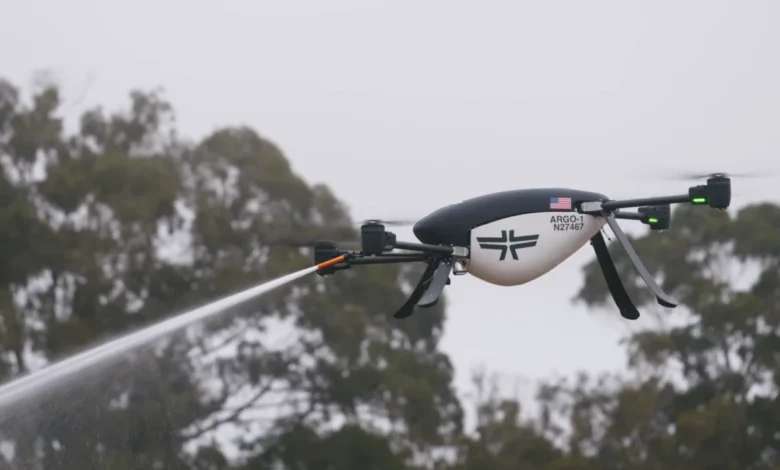
California and Alaska have recently become proving grounds for a new generation of firefighting technology: autonomous drones designed to combat wildfires in their nascent stages. This summer’s trials, involving the strategic deployment of drones capable of spraying water and fire retardants, represent a critical step towards developing a rapid-response toolkit to address the escalating threat of wildfires. As climate change intensifies, transforming what was once a seasonal concern into a nearly year-round risk across much of the United States, innovative solutions are urgently needed.
While these advanced drones cannot replicate the massive payload capacity of traditional, crewed airtankers that deliver vast quantities of suppression agents to remote and large-scale infernos, their potential lies in a different, yet equally vital, role. Companies, fire agencies, and even organizers of major innovation competitions like the $11 million XPRIZE are actively exploring whether these smaller, agile unmanned aerial vehicles (UAVs) can significantly improve response times to emerging fires, thereby preventing them from escalating into destructive conflagrations.
A Glimpse into the Future of Firefighting: CAL FIRE’s Autonomous Drone Trials
A pivotal demonstration of this emerging technology occurred on July 15th, when the California Department of Forestry and Fire Protection (CAL FIRE) conducted its own field test. The exercise, which showcased the coordinated capabilities of five autonomous drones, saw them collectively deploy between 500 and 1,000 gallons of fire-suppressing foam. This significant event, reported by local television station KPMH, was orchestrated with the collaboration of the nonprofit FireWERX and Seneca, a California-based company that is poised to make these drones commercially available as early as 2026.
The drones utilized in this demonstration are Seneca’s Argo-1 models. Each unit is engineered to carry approximately 100 pounds of water or fire retardant. Their operational strategy involves working in synchronized swarms, typically comprising four to six drones. Once a human operator designates a GPS waypoint, these autonomous units navigate to their target. Leveraging onboard sensors, they are designed to detect the distinct heat signature of a developing fire, as detailed in reporting by HeliOps Magazine. Upon identifying the fire, the drones meticulously determine the optimal hovering altitude before sequentially engaging in the spraying operation, one after another, to blanket the flames.
Technical Capabilities and Operational Constraints
The current iteration of Seneca’s Argo-1 drones, while technologically advanced, operates within specific parameters. When fully loaded, these drones are restricted to a round trip of approximately 10 miles, maintaining an average flight speed of about 30 miles per hour. This limitation underscores the strategic necessity for their prepositioning in fire-prone regions or their initial transport to staging areas via ground vehicles. However, the practical design of these drones offers a notable advantage in terms of deployability: each unit can be transported in the bed of a pickup truck with the tailgate down. Furthermore, their relatively light weight when empty allows for manual carrying by two individuals, facilitating rapid deployment in areas inaccessible to larger vehicles.
The Broader Context: Climate Change and the Evolving Wildfire Landscape
The urgency behind developing and deploying technologies like these autonomous firefighting drones is intrinsically linked to the undeniable impact of climate change. Scientific consensus points to a clear trend: warmer temperatures, prolonged droughts, and altered precipitation patterns are creating conditions that are increasingly conducive to the ignition and rapid spread of wildfires.
Supporting Data on Wildfire Trends:
- Increased Frequency and Intensity: Data from the National Interagency Fire Center (NIFC) in the United States consistently shows an upward trend in both the number of wildfires and the acreage burned annually over the past few decades. For instance, in the period from 1985-1994, the average number of wildfires was around 100,000 annually, with an average of 2.2 million acres burned. By the decade 2005-2014, these figures had risen to an average of nearly 70,000 fires and 7.3 million acres burned annually. More recent years have seen even more extreme events.
- Extended Fire Seasons: The traditional perception of a distinct "fire season" is rapidly becoming obsolete. In many Western states, fire seasons are now starting earlier in the spring and extending later into the fall, effectively creating a year-round or near year-round threat. This shift is attributed to earlier snowmelt, hotter summers, and drier conditions persisting for longer periods.
- Human-Caused vs. Natural Ignitions: While lightning remains a natural ignition source, a significant percentage of wildfires, particularly those that grow large and destructive, are caused by human activities. These can range from unattended campfires and discarded cigarettes to equipment malfunctions and arson. The dry, volatile conditions amplified by climate change make these human-caused ignitions far more perilous.
Background Context of Innovation:
The development of autonomous firefighting drones is not an isolated endeavor. It is part of a broader technological push within the emergency response sector, driven by the need for greater efficiency, safety, and effectiveness. The XPRIZE competition, specifically, has been instrumental in fostering innovation across various fields, including environmental challenges. By incentivizing private sector development and encouraging collaboration between industry and government agencies, competitions like these aim to accelerate the transition of cutting-edge research into practical applications. FireWERX, the nonprofit supporting the CAL FIRE demonstration, also plays a crucial role in bridging the gap between technological developers and the operational needs of firefighters.
Chronology of Emerging Drone Firefighting Efforts
The trials conducted by CAL FIRE represent a significant milestone, but they are built upon a foundation of ongoing research and development:
- Early Explorations (Late 2010s): Initial concepts and small-scale tests of drones for aerial observation and limited suppression began to emerge. These were often proof-of-concept demonstrations by smaller companies and research institutions.
- Growing Investment and Partnerships (Early 2020s): Increased awareness of climate-driven wildfire risks led to greater investment in drone technology for firefighting. Partnerships between drone manufacturers, fire agencies, and research bodies became more common.
- XPRIZE Wildfire Competition (Launched 2019, Ongoing): This multi-million dollar competition incentivizes teams to develop technologies that can detect, map, and extinguish wildfires. The success of the competition is measured by the effectiveness and scalability of the proposed solutions.
- CAL FIRE’s Advanced Trials (Mid-2023): The July 15th demonstration by CAL FIRE, involving autonomous swarm capabilities and significant payload delivery, signifies a maturation of the technology, moving beyond basic observation to active suppression.
- Commercialization Pathways (Post-2025): Companies like Seneca are actively working towards making their advanced firefighting drones commercially available, indicating a belief in the market viability and operational readiness of these systems in the near future.
Potential Impact and Broader Implications
The integration of autonomous drones into wildfire response strategies holds several profound implications:
- Enhanced Early Intervention: The primary advantage of these drones is their potential for rapid deployment. By being able to reach a fire’s ignition point much faster than traditional ground crews or larger aircraft, they can deliver suppression agents when the fire is still small and manageable, preventing it from growing exponentially. This "stop it when it’s small" approach is critical for cost-effectiveness and for minimizing environmental damage.
- Improved Safety for Firefighters: Drones can operate in hazardous conditions that may be too dangerous for human firefighters, such as steep terrain, areas with unstable footing, or proximity to active flames. This can reduce the risk of injury or fatality among fire crews.
- Increased Operational Efficiency: The ability of drones to work in coordinated swarms can cover more ground and apply suppression agents more precisely than a single aircraft. Autonomous operation also reduces the need for constant human piloting, freeing up skilled personnel for other critical tasks.
- Data-Driven Decision Making: Drones equipped with advanced sensors can provide real-time data on fire behavior, spread, and environmental conditions. This information is invaluable for incident commanders in making informed strategic decisions.
- Complementary to Existing Resources: It is crucial to reiterate that these drones are not intended to replace existing firefighting assets. Instead, they are designed to augment them, filling a gap in rapid, localized response that is often difficult to address with larger, slower-moving resources.
Official Responses and Industry Outlook
While specific official statements directly commenting on the July 15th CAL FIRE demonstration were not immediately available in the provided text, the nature of the collaboration itself speaks volumes. CAL FIRE’s active participation, alongside organizations like FireWERX and commercial entities like Seneca, indicates a strong commitment from these agencies to explore and adopt innovative solutions.
Inferred statements from officials might highlight:
- Recognition of the Evolving Threat: Acknowledging that climate change necessitates a proactive and technologically advanced approach to wildfire management.
- Emphasis on Collaboration: Stressing the importance of public-private partnerships and inter-agency cooperation in developing and deploying new firefighting tools.
- Focus on Efficacy and Safety: Underlining that any new technology must prove its effectiveness in suppressing fires and its safety for both the public and firefighting personnel.
The broader industry outlook is one of cautious optimism. The successful demonstration of autonomous swarm capabilities and payload delivery marks a significant step forward. However, challenges remain, including regulatory hurdles for widespread drone operation, the need for robust infrastructure for charging and maintenance, and further refinement of sensor technology and autonomous decision-making algorithms.
The Road Ahead: Integration and Adaptation
The trials in California and Alaska are not merely isolated experiments; they are indicative of a paradigm shift in how the nation approaches wildfire mitigation. As the climate continues to evolve and wildfire seasons become more unpredictable and severe, the role of advanced technologies like autonomous firefighting drones will undoubtedly grow. The ability to rapidly detect and suppress fires in their infancy, coupled with the potential for enhanced firefighter safety and operational efficiency, positions these UAVs as a crucial component of future wildfire management strategies. The ongoing development and integration of such technologies are vital to safeguarding communities and natural landscapes against the increasing threat of infernos.